The official test
The National Weather Service glossary says a blizzard means that the following conditions are expected to prevail for a period of 3 hours or longer. [NWS GLOSSARY] Those conditions include sustained wind or frequent gusts to 35 miles an hour or greater. [NWS GLOSSARY] They also include considerable falling and/or blowing snow, reducing visibility frequently to less than ¼ mile. [NWS GLOSSARY]
A Ground Blizzard Warning is issued when blizzard conditions are solely caused by blowing and drifting snow. [NWS GLOSSARY] The National Weather Service office in Flagstaff notes that while heavy snowfalls and severe cold often accompany blizzards, they are not required. [NWS FLAGSTAFF] Sometimes, that office says, strong winds pick up snow that has already fallen, creating a ground blizzard. [NWS FLAGSTAFF]
Tick the conditions that are happening, or that a forecast says will happen. The official wording stays in the table below, so the desk is a clearer view of the record, not a different one.
The National Weather Service definition needs all three: the wind, the poor visibility in falling or blowing snow, and a spell of at least three hours. Heavy snow on its own is not enough.
| Part | What the glossary says |
|---|---|
| Duration | The conditions are expected to prevail for a period of 3 hours or longer. |
| Wind | Sustained wind or frequent gusts to 35 miles an hour or greater. |
| Snow and view | Considerable falling and/or blowing snow (reducing visibility frequently to less than ¼ mile). |
| Ground blizzard | A Ground Blizzard Warning is issued when blizzard conditions are solely caused by blowing and drifting snow. |
A full page sits with the same desk and table, including how a Blizzard Warning differs from a Winter Storm Warning.
Storms that made the record
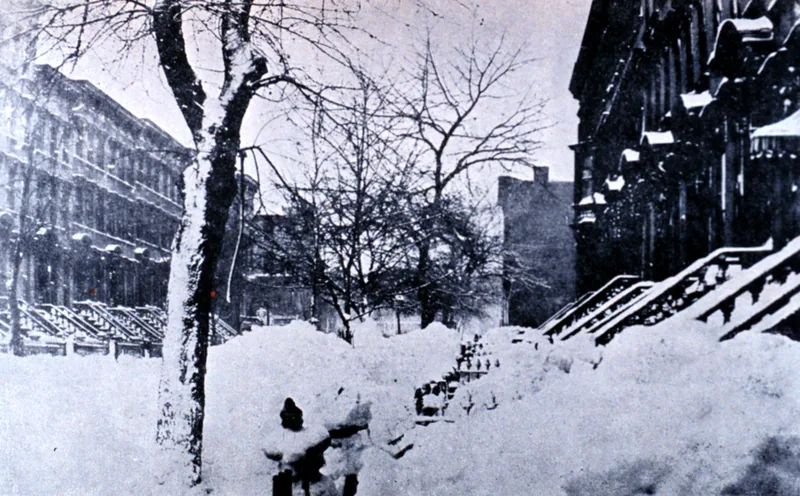
In the whiteout, the Heritage essay says, between 250 and 500 people perished. The storm was nicknamed “The Children’s Blizzard”, and many of the dead were children on their walk home from school. [NWS HERITAGE] The storm cut off and immobilised East Coast cities, affecting one quarter of the U.S. population. The Heritage essay says more than 400 people died from this storm, 200 in New York City alone, and that more than 200 vessels were destroyed up and down the eastern seaboard, resulting in the death of 100 seamen. [NWS HERITAGE] The La Crosse office says the blizzard left 49 dead in Minnesota, gales on Lake Michigan caused shipwrecks resulting in another 59 deaths, and the storm claimed a total of 154 lives, as well as killing thousands of cattle in Iowa and more than a million turkeys in Wisconsin, Minnesota and other states. [NWS LA CROSSE]
Each figure is tied to its source. Where two official pages disagree on a death toll, both numbers are given.
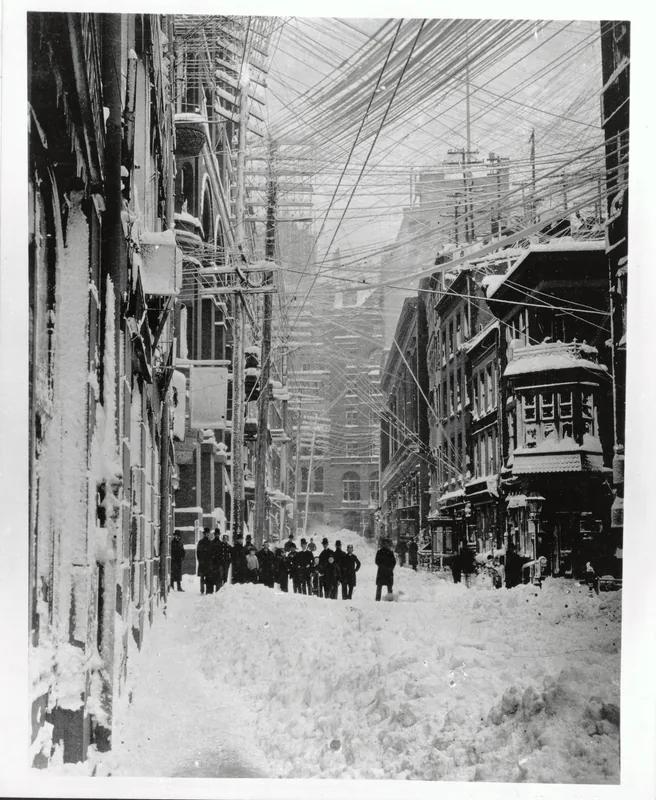
Open the famous-blizzards desk for the Children’s Blizzard, the Great Blizzard of 1888, the Armistice Day Storm, and a 1922 contrast.
A few true things
- It says the upper Midwest and Great Plains of the United States tend to be the region that experiences blizzards most often, with few trees or other obstructions to reduce wind and blowing snow. [NWS FLAGSTAFF]
- In the 1870s, the same page records, an Iowa newspaper used the word “blizzard” to describe a snowstorm; previously the term had referred to a cannon shot or a volley of musket fire, and by the 1880s the weather sense was used by many across the United States and in England. [NWS FLAGSTAFF]
- Well-known nor’easters listed by the Service include the Blizzard of 1888, the “Ash Wednesday” storm of March 1962, the New England Blizzard of February 1978, the March 1993 “Superstorm”, and the Boston snowstorms of January and February 2015. [NWS NOR'EASTER]
- Its advice is: do not travel. If you must travel, have a winter survival kit with you. If you get stranded, stay with your vehicle and wait for help to arrive. [NWS WARNINGS]
- The Heritage essay says the failure of the Signal Service to issue a “Cold Wave Warning” for the two calamitous blizzards of 1888 became a motivating factor for moving the meteorological service out of the War Department, and that legislation creating the Weather Bureau under the Department of Agriculture was signed by President Benjamin Harrison on 1 October 1890. [NWS HERITAGE]
This is a history and weather site. Safety wording is quoted from public National Weather Service guidance and is not a substitute for official local warnings.
Printables
The Blizzard Reference Guide
An 11-page guide to the official National Weather Service definition, how blizzards form, famous storms of 1888 and 1940, and public safety wording. A4 and US Letter.
The Blizzard Activity Pack
A 9-page pack: a sourced quiz, an “is it a blizzard?” checklist, a famous-storms comparison, and a labelled weather-map sheet. A4 and US Letter.
The Famous Blizzards Pack
A 7-page companion: period photographs and short sourced notes on the Children’s Blizzard, the Great Blizzard of 1888, and the Armistice Day Storm. A4 and US Letter.
The Complete Blizzard Printables Bundle
All three packs, 27 pages, A4 and US Letter, at a bundle price.