Home · Myths
Checks
Myths and checks
“A blizzard is just a very heavy snowfall.”
The National Weather Service glossary says a blizzard means that the following conditions are expected to prevail for a period of 3 hours or longer. [NWS GLOSSARY] Those conditions include sustained wind or frequent gusts to 35 miles an hour or greater. [NWS GLOSSARY] They also include considerable falling and/or blowing snow, reducing visibility frequently to less than ¼ mile. [NWS GLOSSARY] The National Weather Service office in Flagstaff notes that while heavy snowfalls and severe cold often accompany blizzards, they are not required. [NWS FLAGSTAFF]
“It has to be snowing for a blizzard.”
A Ground Blizzard Warning is issued when blizzard conditions are solely caused by blowing and drifting snow. [NWS GLOSSARY] Sometimes, that office says, strong winds pick up snow that has already fallen, creating a ground blizzard. [NWS FLAGSTAFF]
“Every famous historic snowstorm was a blizzard.”
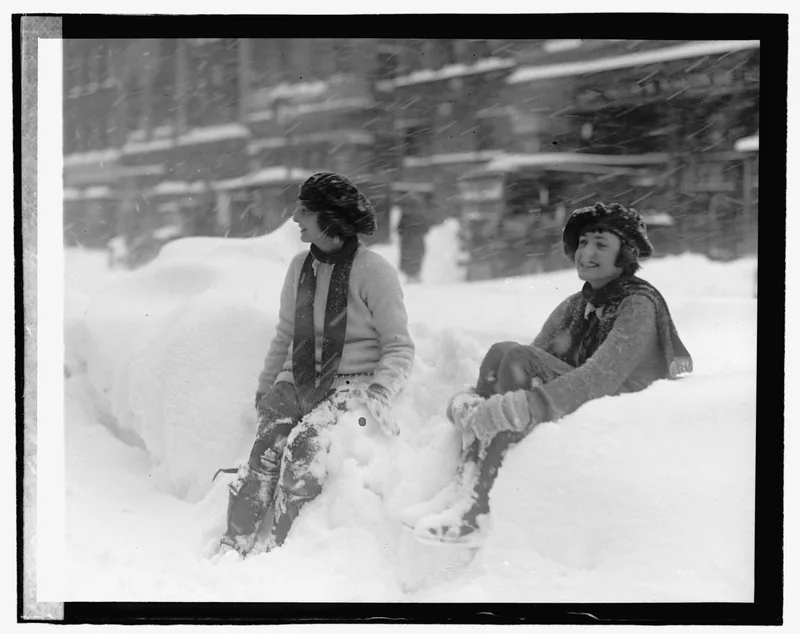
The National Weather Service Baltimore/Washington office records that 28 January 1922 brought the deepest snow of that century to parts of Virginia, with 19 inches at Richmond, 28 inches in Washington, D.C., and 25 inches in Baltimore. [NWS BALT/WASH] The storm is known historically, that office says, as the Knickerbocker Storm. [NWS BALT/WASH] The weight of the snow was too much for the Knickerbocker Theater on 18th Street and Columbia in Northwest Washington, D.C.: the roof collapsed, taking the balcony down with it and crushing nearly 100 people to death. [NWS BALT/WASH]
“Blizzard and winter storm mean the same in a warning.”
A Blizzard Warning, the glossary says, is issued for winter storms with sustained or frequent winds of 35 mph or higher, with considerable falling and/or blowing snow that frequently reduces visibility to ¼ of a mile or less, expected to prevail for a minimum of 3 hours. [NWS GLOSSARY] A Winter Storm Warning, by contrast, is issued for a significant winter weather event including snow, ice, sleet or blowing snow, or a combination of these hazards — travel may become difficult or impossible, and the Service says to delay travel plans until conditions improve. [NWS WARNINGS]